

Highlights from February Panel Discussion
Our February panel, “The Impact of Federal Policy on Nonprofits and Our Communities,” brought together a diverse group of thought leaders, community members, and nonprofit professionals for a conversation that was as timely as it was important. We were joined by Michele Conderino, Chief Executive Officer of Open Doors, and Fionnuala Darby-Hudgens, Director of Data Strategic Planning at the CT Data Collaborative, who shared their expertise on policy, data, and community impact. Lauren Patterson served as the moderator, guiding a thoughtful and engaging discussion.
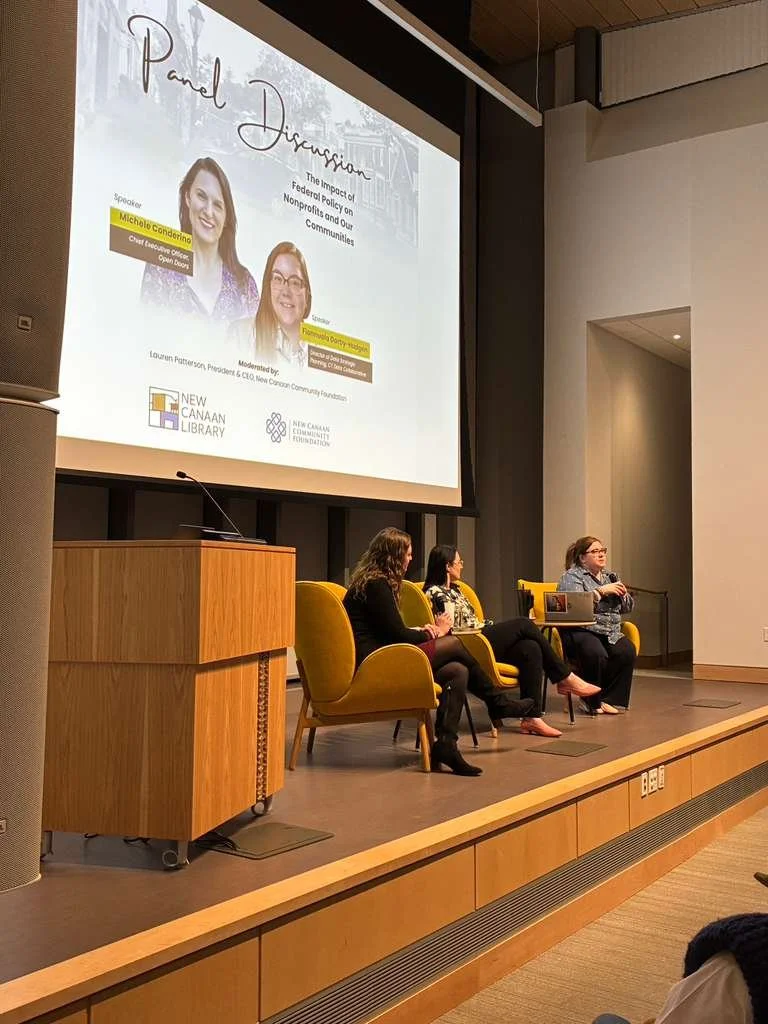
Lauren Patterson (L), Michele Conderino, Chief Executive Officer of Open Doors (M), and Fionnuala “Finn” Darby-Hudgens, Director of Data Strategic Planning at the CT Data Collaborative (R)
The evening allowed attendees to understanding how federal and local decisions affect both nonprofits and the people they serve. This conversation aligns closely with NCCF priorities, emphasizing the importance of supporting nonprofits in a changing environment.
Top 5 Key Takeaways from the February Panel Discussion
Federal Instability is Hitting Communities Hard
Rapid shifts in federal programs and benefits are leaving residents unsure of what they qualify for. People who were once eligible may suddenly lose access to food, housing, or healthcare supports, only to have them restored later. This back-and-forth not only causes practical challenges but also erodes trust in essential services, making it harder for communities to rely on the systems meant to support them.
Nonprofits Face Rising Administrative Strain
Organizations are spending more time deciphering complex rules, ensuring compliance, and keeping up with shifting funding priorities. The uncertainty of whether decisions will stand, or be challenged in court, adds additional layers of stress. Many nonprofits are again operating in “survival mode,” balancing growing community needs with limited resources and staffing.
Public Data is Disappearing
The loss of accessible federal datasets makes it increasingly difficult for nonprofits, municipalities, and local leaders to plan effectively, track needs, and advocate for their communities. Once data is removed, it’s often gone permanently. Changes to how government agencies share and collect information, such as county-level housing data that doesn’t capture local variations, further complicate efforts to measure community needs accurately.
Funding Changes Affect Everyone
Policy shifts ripple far beyond individuals directly receiving benefits. Schools, hospitals, libraries, and local governments all feel the impact. Understanding these interconnections is crucial, as changes intended to target vulnerable populations can inadvertently affect entire communities.
Flexible Funding is More Important Than Ever
Panelists emphasized that adaptable, targeted support is critical in uncertain times. Flexible funding allows nonprofits to respond to emerging challenges, prioritize pressing needs, and make sure resources reach the communities that need them most, even as federal rules and priorities shift unexpectedly.
Our February panel highlighted how navigating policy and funding changes requires collaboration, adaptability, and careful attention. While the challenges are significant, the discussion also showcased the resilience, innovation, and dedication of our nonprofit community. We’re grateful to our panelists and attendees for sharing their insights and experiences.
Watch the full panel discussion below by clicking the button.
Stay tuned for upcoming panels, events, and resources designed to support and strengthen our community together.